

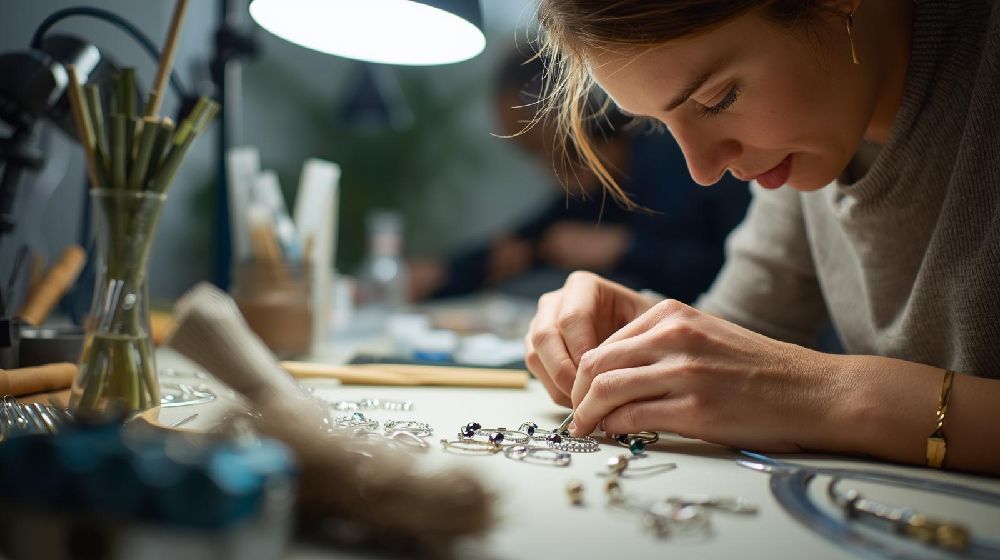
As sustainability becomes a global priority, the jewelry industry is embracing responsible practices that minimize environmental impact without compromising quality or design. Sustainable jewelry production focuses on reducing material waste, lowering energy consumption, and optimizing resources throughout the manufacturing process. These techniques are shaping a more ethical and efficient future for jewelry making.
Precision Design to Minimize Waste
Sustainability begins at the design stage. Digital design tools and CAD modeling allow manufacturers to calculate exact material requirements before production starts. This precision reduces excess metal usage and prevents unnecessary waste, especially in precious materials like gold and silver.
Advanced Manufacturing Technologies
Technologies such as CNC machining and laser welding play a critical role in sustainable production. These methods ensure accurate cutting, strong joins, and minimal material loss. Laser welding, in particular, uses focused energy, reducing heat spread and lowering energy consumption compared to traditional soldering methods.
Recycling and Reusing Materials
Responsible jewelry production includes recycling metal scraps generated during manufacturing. Gold and silver leftovers are collected, refined, and reused, creating a closed-loop system that conserves resources and reduces the need for new raw material extraction.
Energy-Efficient Processes
Modern manufacturing facilities are adopting energy-efficient equipment and optimized workflows. Automated systems reduce processing time and energy usage, while better planning minimizes repeated steps. This results in lower carbon footprints and more efficient production cycles.
Lightweight and Durable Design Philosophy
Creating jewelry that uses less material without sacrificing strength is another sustainability-focused approach. Balanced designs and engineered structures reduce metal weight while maintaining durability, contributing to responsible resource usage.
Ethical and Responsible Production
Sustainable production also involves ethical labor practices and transparent sourcing. Manufacturers committed to sustainability ensure safe working conditions and responsible supply chains, aligning environmental care with social responsibility.
Final Thoughts
Sustainable jewelry production is not a trend—it’s a responsibility. By embracing precision design, advanced technology, recycling, and energy-efficient processes, the industry is moving toward a future where beauty and responsibility go hand in hand.
Jewelry crafted with sustainability in mind carries more than elegance—it carries a commitment to protecting the planet for generations to come.