

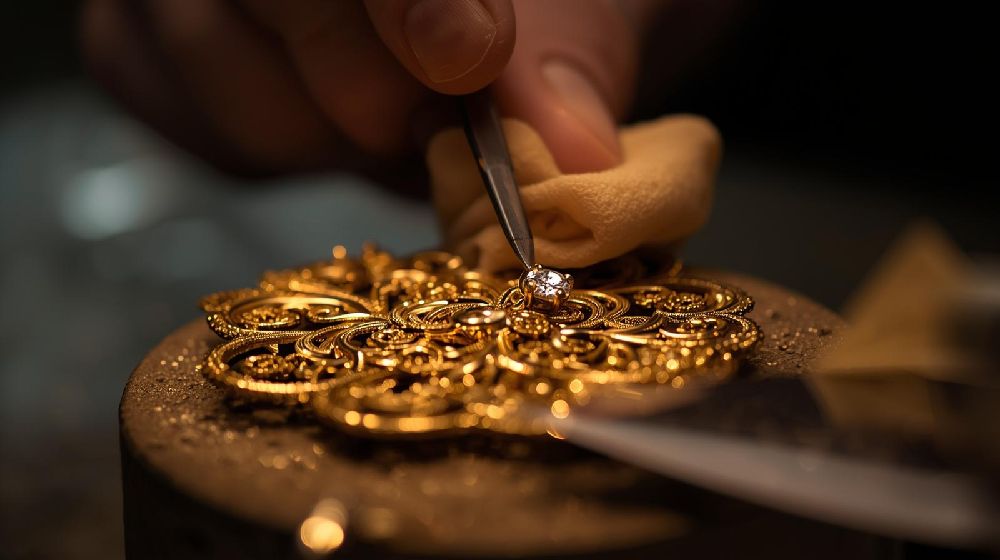
The brilliance and elegance of gold jewelry are not just a result of its material—they are also a product of expert polishing and finishing techniques. Every piece, from delicate rings to intricate bangles, goes through multiple steps to achieve that flawless shine, smooth surface, and professional look. Understanding these techniques gives insight into the craftsmanship behind stunning jewelry.
Why Polishing and Finishing Matter
Polishing and finishing serve two main purposes:
-
Aesthetic Appeal: Smooth, reflective surfaces enhance the jewelry’s brilliance and make gemstones and designs stand out.
-
Durability: Proper finishing removes sharp edges, reduces micro-scratches, and ensures long-lasting wear.
Even the most expensive gold can appear dull if these steps are not performed correctly.
Common Jewelry Polishing Techniques
-
Mechanical Polishing
Mechanical polishing uses rotary tools with soft wheels or brushes and polishing compounds to smooth surfaces. This technique is ideal for removing minor imperfections and creating a mirror-like shine. -
Buffing
Buffing employs softer wheels and fine compounds for the final luster. It enhances the surface finish without removing significant metal, perfect for delicate designs. -
Tumbling
In tumbling, jewelry pieces are placed in a vibrating or rotating barrel with abrasive media. This method polishes multiple pieces at once and is especially effective for small items and intricate textures. -
Electrolytic Polishing (Electropolishing)
This chemical process removes a microscopic layer of metal, smoothing and brightening surfaces. It also improves corrosion resistance and is often used for white gold and complex designs.
Finishing Techniques That Add Texture and Style
-
Matte or Satin Finish
A soft, non-reflective surface achieved through fine abrasives or sandblasting. Matte finishes create subtle elegance and contrast beautifully with polished elements. -
High-Gloss Finish
The classic reflective finish that enhances gold’s natural brilliance, often achieved through buffing and mechanical polishing. -
Hammered or Textured Finish
Adds visual interest by creating small indentations or patterns. Modern techniques like CNC engraving allow precision textures on gold surfaces. -
Rhodium Plating
Applied to white gold and some yellow gold pieces, rhodium plating enhances shine, protects against scratches, and adds a bright white finish.
The Role of Craftsmanship and Technology
Advanced technology like CNC machines, laser welding, and automated polishing systems complements traditional hand-finishing methods. Combining precision tools with artisan skills ensures each jewelry piece achieves maximum shine, durability, and beauty.
Conclusion
The sparkle and sophistication of gold jewelry are the results of meticulous polishing and finishing techniques. From mechanical polishing to rhodium plating and textured finishes, these processes enhance both aesthetics and longevity. Behind every gleaming necklace, bangle, or ring is a combination of craftsmanship, technology, and attention to detail—the true reason jewelry continues to captivate hearts worldwide.