

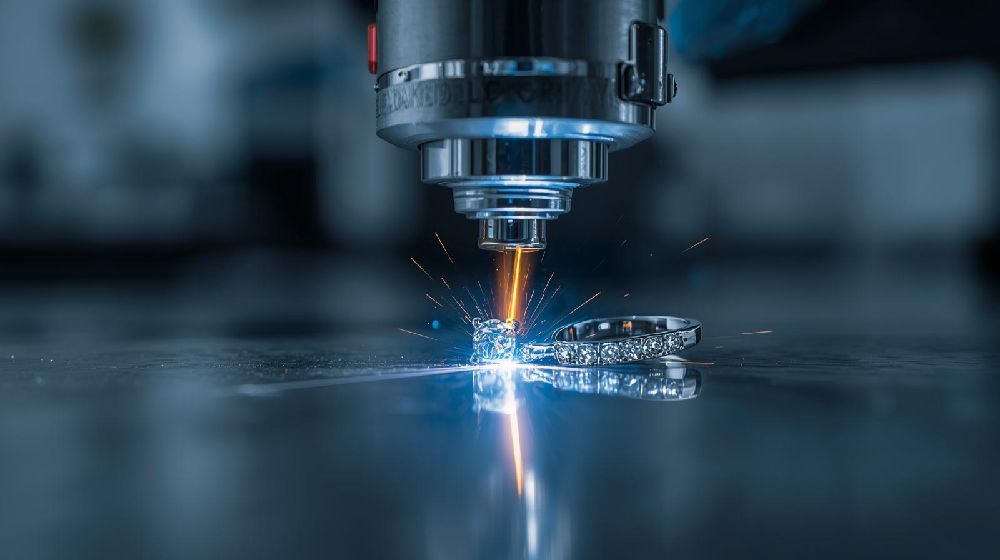
In the fast-evolving world of jewelry manufacturing, technology is no longer just an add-on—it is the backbone of precision, durability, and design excellence. Among all innovations, laser welding has emerged as one of the most transformative breakthroughs. For manufacturers like Vishal Choksi, who believe in uncompromised craftsmanship and futuristic production methods, laser technology represents the perfect blend of engineering and artistry.
1. What Makes Laser Welding So Revolutionary?
Traditional soldering relies on flame, heat, and filler metals, which can distort delicate gold components. Laser welding changes the entire process.
Laser welding uses a narrow, concentrated beam, which melts the metal at microscopic levels without affecting the surrounding area.
This results in:
-
No visible seams
-
No surface damage
-
No discoloration
-
No structural weakness
For a perfection-focused craftsman like Vishal Choksi, this technology aligns with the core goal: flawless jewelry that looks elegant and lasts longer.
2. Invisible Welding – The Art of Seamless Beauty
One of the greatest advantages of laser welding is how it creates invisible joints.
With laser welding:
-
The joint blends perfectly with the original metal
-
Structural integrity increases
-
No excess solder is needed
-
The finish remains clean and natural
Consumers want jewelry that appears sculpted, not assembled. Laser welding delivers exactly that—a seamless luxury finish.
3. Precision That Human Hands Alone Cannot Achieve
Even the most skilled artisan can struggle with extreme micro-level detailing. But laser welding provides:
-
Micron-level accuracy
-
Exact heat control
-
Consistency in repetitive tasks
-
No risk of overheating soft 22K gold
This precision allows Vishal Choksi’s manufacturing approach to push the boundaries of design—creating complex patterns, ultra-light frameworks, and delicate joins that would be difficult or impossible through traditional soldering.
4. Stronger Joints, Longer Life
In fine jewelry, a joint is often the first point to weaken. Laser welding fixes that.
Benefits:
-
Stronger than traditional solder
-
Retains purity of gold
-
Perfect for repairing thin wires, chains, bangles
-
Ideal for modern lightweight jewelry trends
This means jewelry not only looks better but lasts longer, giving customers the confidence of true quality.
5. Essential for Modern Designs: CNC + Laser Combination
Today’s designs are getting sharper, lighter, and more technical.
That is why the combination of CNC machining + laser welding is a signature of advanced jewelry manufacturing.
Together, they offer:
-
Robotic precision
-
Perfect symmetry
-
Ultra-clean joins
-
Structural stability
-
Zero manual error
This is the foundation on which manufacturers like Vishal Choksi build new-generation gold jewelry.
6. No Heat Marks, No Polishing Loss
Traditional soldering often leaves:
-
Burn marks
-
Black patches
-
Extra solder lines
-
Uneven texture
Laser welding avoids all of this.
It focuses heat only where needed, protecting gemstones, enamel, and delicate textures.
Result:
-
Minimal polishing
-
No weight loss
-
Faster finishing
-
Perfect shine maintained from start to end
This is why the technique is favored for premium jewelry production.
7. Ideal for Repairs & Custom Work
Laser welding is not only for manufacturing but also for high-quality repairs.
It can:
-
Fix broken chains
-
Re-join micro-links
-
Repair prongs without removing stones
-
Strengthen thin structures
-
Create custom joint adjustments
This allows brands to offer precision servicing, enhancing customer trust and retention—something that aligns perfectly with the customer-first approach of Vishal Choksi’s craftsmanship culture.
8. The Future of Jewelry Is Laser-Based
Laser technology is no longer optional—it is becoming the heart of modern manufacturing.
The future includes:
-
AI-guided laser welding
-
Automated micro-join machines
-
Laser-based stone setting support
-
Hybrid CNC-laser fabrication systems
Manufacturers who adopt these innovations lead the market with better quality, reliability, and aesthetics.
And under the leadership mindset of experts like Vishal Choksi, who believe in upgrading processes with science and precision, the jewelry industry is moving toward a new era of finish, fineness, and flawless beauty.
Conclusion
Laser welding is redefining jewelry craftsmanship—making it cleaner, stronger, more precise, and visually perfect.
It supports innovative designs, protects the purity of gold, and elevates product quality to a truly international standard.
For leaders like Vishal Choksi, who are committed to blending tradition with technology, laser welding represents a new language of craftsmanship—one where invisible joints and perfect shine speak louder than words.