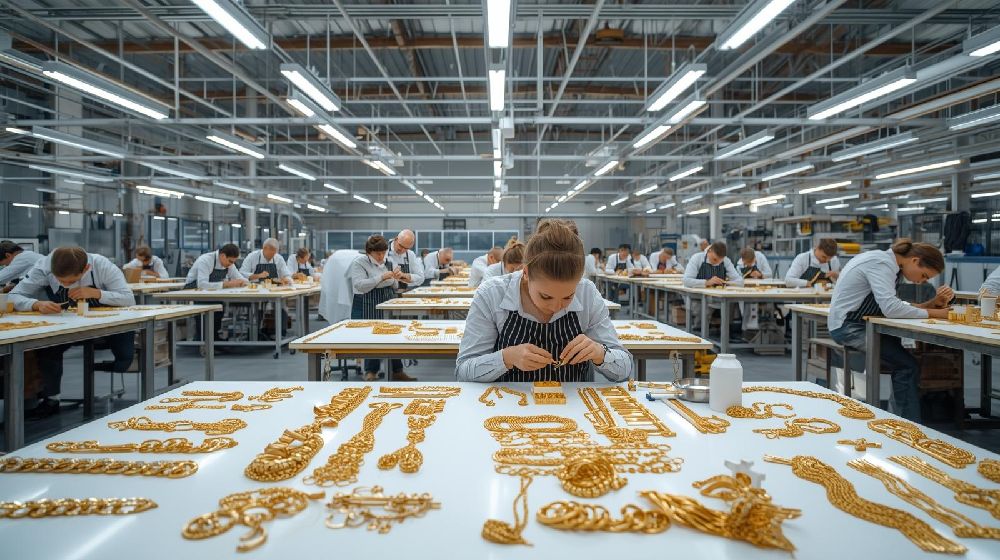
The gold jewelry industry has traditionally been associated with skilled artisans, intricate craftsmanship, and time-intensive production processes. While artistry remains at the heart of jewelry making, modern manufacturing methods are transforming how gold jewelry is produced. One of the most influential approaches driving this transformation is lean manufacturing.
Originally developed in the automotive industry, lean manufacturing focuses on reducing waste, improving efficiency, and maximizing value. Today, this approach is reshaping gold jewelry production—making it faster, more precise, cost-effective, and sustainable without compromising quality.
What Is Lean Manufacturing?
Lean manufacturing is a systematic method aimed at minimizing waste while maintaining productivity. In jewelry production, “waste” doesn’t just mean scrap metal—it includes:
-
Excess material usage
-
Production delays
-
Overprocessing
-
Rework due to defects
-
Unnecessary inventory
-
Idle labor time
The goal is simple: create more value for customers using fewer resources.
Reducing Gold Waste and Material Loss
Gold is a precious and high-value material. Even minimal loss during production can significantly impact costs. Lean manufacturing emphasizes:
-
Precise metal allocation
-
Optimized casting and cutting processes
-
Efficient scrap collection and recycling
-
Improved quality control to reduce remakes
By closely monitoring every gram of gold used, manufacturers can reduce wastage while maintaining profitability.
Streamlining Production Flow
Traditional jewelry workshops often operated in isolated stages—design, casting, polishing, stone setting, and finishing were treated separately. Lean manufacturing introduces:
-
Continuous workflow systems
-
Reduced handoffs between departments
-
Clear production mapping
-
Standardized operating procedures
This streamlining reduces delays and ensures smoother transitions from CAD design to final polish.
Improving Precision Through Technology
Lean principles encourage the use of modern tools that enhance accuracy and consistency. Technologies such as:
-
CNC machining
-
Laser welding
-
CAD/CAM software
-
Automated polishing systems
help reduce human error and rework. Fewer defects mean less wasted gold and improved production speed.
Precision is not just about efficiency—it directly impacts product quality and customer trust.
Inventory Optimization
Holding excess gold inventory ties up capital and increases risk. Lean manufacturing promotes:
-
Just-in-time production
-
Demand-based manufacturing
-
Reduced stockpiling of raw materials
By aligning production closely with actual market demand, jewelry brands can respond quickly to trends without overproducing.
Quality Control as a Core Principle
In lean manufacturing, quality is built into the process rather than inspected at the end. This includes:
-
Real-time inspection checkpoints
-
Standardized quality metrics
-
Early detection of defects
When quality issues are identified early, costly remakes are avoided, saving time, labor, and precious material.
Faster Turnaround Times
Modern customers expect faster delivery, especially in customized jewelry. Lean systems help:
-
Shorten production cycles
-
Improve coordination between design and manufacturing teams
-
Enable quicker sampling and prototyping
This agility allows brands to launch new collections faster and meet tight deadlines.
Enhancing Sustainability
Lean manufacturing naturally supports sustainability by:
-
Reducing material waste
-
Lowering energy consumption
-
Minimizing excess production
-
Encouraging responsible sourcing
In an industry increasingly focused on ethical and eco-friendly practices, lean systems align business efficiency with environmental responsibility.
Empowering Skilled Craftsmen
Lean manufacturing does not replace craftsmanship—it enhances it. By eliminating repetitive inefficiencies and process bottlenecks, artisans can focus on:
-
Fine detailing
-
Creative innovation
-
Precision finishing
Technology handles routine precision, while skilled hands add artistry and character.
Cost Efficiency Without Compromising Luxury
Luxury jewelry must maintain high standards of design and durability. Lean manufacturing ensures:
-
Controlled production costs
-
Consistent quality
-
Competitive pricing
-
Greater profitability
Customers receive better value without sacrificing craftsmanship or purity.
The Future of Lean Jewelry Production
As automation, AI-based quality checks, and digital tracking systems continue to evolve, lean manufacturing in gold jewelry will become even more refined. Smart factories and data-driven production planning will further enhance:
-
Traceability
-
Accuracy
-
Resource optimization
-
Global supply chain coordination
Lean manufacturing is not just a trend—it is becoming a standard in modern gold jewelry production.
Final Thoughts
Lean manufacturing is reshaping gold jewelry production by combining efficiency with excellence. It reduces waste, improves precision, enhances sustainability, and shortens delivery times—all while preserving the artistry that defines fine jewelry.
In today’s competitive market, lean production is not just about saving costs. It is about delivering consistent quality, responsible manufacturing, and greater value to customers.
The future of gold jewelry lies in this balance between tradition and efficiency—where craftsmanship meets smart production systems.