

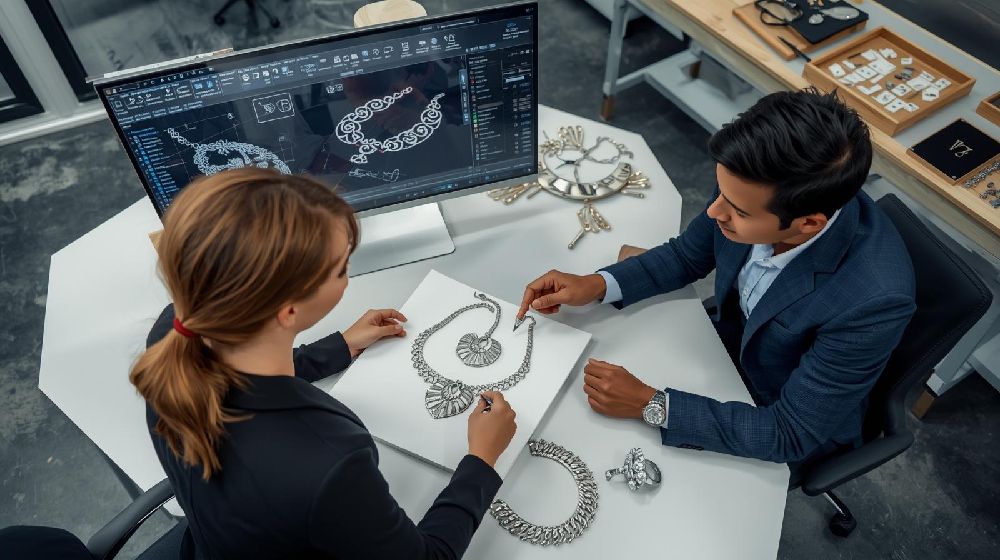
The journey from a jewelry concept to a stunning finished piece is a fascinating blend of creativity, precision, and teamwork. Behind every exquisite gold necklace, ring, or bangle lies a close collaboration between designers and manufacturers, ensuring that artistic vision transforms seamlessly into wearable reality.
From Inspiration to Design Sketch
Every jewelry piece begins with an idea. Designers draw inspiration from:
-
Nature, architecture, and cultural motifs
-
Fashion trends and customer feedback
-
Art, heritage, and personal stories
These inspirations are first translated into sketches or digital renderings, which capture the concept’s essence while considering wearability and functionality.
CAD Modeling: The Bridge Between Concept and Reality
Once a design is finalized on paper, it moves to CAD (Computer-Aided Design). CAD modeling allows designers and manufacturers to:
-
Visualize the piece in 3D
-
Test proportions, dimensions, and ergonomics
-
Simulate settings for stones, textures, and finishes
This step ensures that what looks good on paper will also look flawless in gold.
Material Selection & Manufacturing Consultation
Collaboration deepens when selecting materials. Designers work with manufacturers to decide:
-
Gold karat and alloy composition
-
Gemstones, diamonds, or enamel elements
-
Appropriate finishes (matte, glossy, hammered)
Manufacturers provide expertise on technical feasibility, durability, and production efficiency, ensuring the design is both beautiful and practical.
Prototype Creation & Sampling
Before mass production, manufacturers create prototypes or samples. This allows designers to:
-
Examine the piece from every angle
-
Check fit, weight, and comfort
-
Suggest modifications for aesthetics or structural integrity
Sample approval is crucial—it’s where artistry meets engineering precision.
Refinement Through Feedback Loops
Collaboration is iterative. Designers provide feedback on:
-
Gemstone placement and alignment
-
Engraving or texture precision
-
Overall balance and proportions
Manufacturers refine the piece until it meets both creative vision and technical standards. Modern tools like 3D printing and laser technology accelerate this process, reducing errors and enhancing precision.
Final Manufacturing & Quality Checks
Once the design is perfected, manufacturers begin full-scale production. Skilled artisans and advanced machines ensure:
-
Accurate casting or CNC machining
-
Strong, invisible joints using techniques like laser welding
-
Consistent finishes, polishing, and plating
Each piece undergoes rigorous quality control to meet brand and design standards.
Packaging & Presentation
Designers and manufacturers also collaborate on presentation, ensuring the finished jewelry reflects the concept’s luxury and storytelling. Packaging, branding, and certification details are aligned with the design philosophy.
Why Collaboration Matters
-
Design Integrity: Ensures the original concept is preserved
-
Technical Excellence: Guarantees structural durability and precision
-
Efficiency: Reduces material waste and production errors
-
Innovation: Encourages experimentation with new techniques and materials
Strong designer-manufacturer collaboration is the backbone of jewelry that is both artistic and wearable.
Conclusion: Turning Vision Into Wearable Art
Jewelry is more than metal and stones—it is the result of creative ideas brought to life through collaboration, skill, and technology. By working closely with manufacturers, designers ensure that every piece not only dazzles the eye but also stands the test of time, combining artistry, precision, and craftsmanship in perfect harmony.