

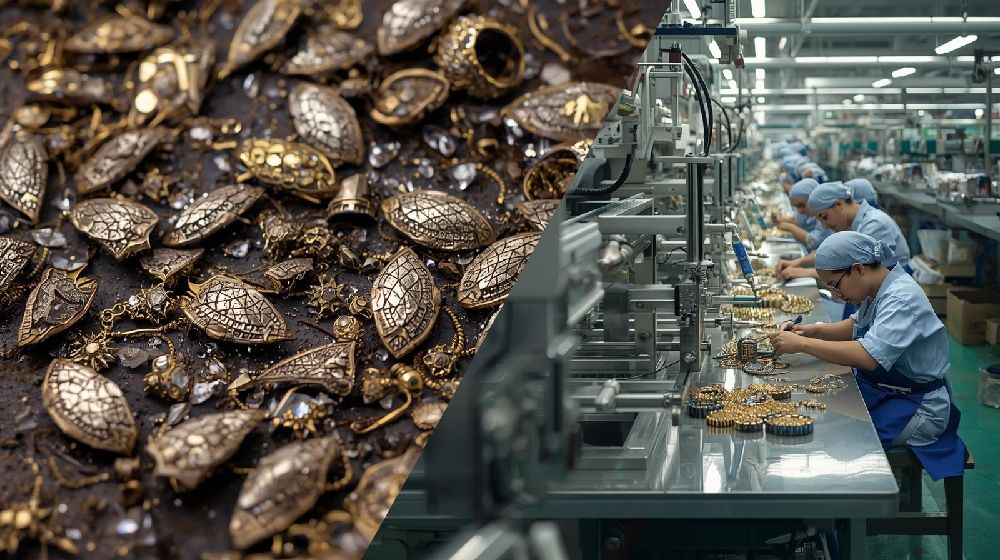
In the world of jewelry manufacturing, design often steals the spotlight—but in large-scale production, process control is what truly ensures quality, efficiency, and consistency. While a striking design attracts attention, it is the controlled processes behind the scenes that determine whether the final product meets the high standards consumers expect.
The Role of Process Control in Jewelry Production
Process control refers to the systematic management of every step in manufacturing—from alloy composition and casting to finishing and quality checks. By monitoring variables like temperature, pressure, weight, and alignment, manufacturers ensure each piece matches specifications, minimizing defects and material loss.
Without proper process control, even the most beautiful design can fail in execution.
Maintaining Consistency Across Volumes
Mass production demands that hundreds or thousands of pieces look and feel identical. Even slight variations in thickness, weight, or finish can compromise quality. Process control standardizes production, ensuring every necklace, ring, or bracelet meets brand expectations.
Consistency is the backbone of consumer trust.
Reducing Material Waste and Cost
Gold, silver, and precious gemstones are valuable, making waste a major concern in mass manufacturing. Effective process control minimizes errors that lead to rework or scrap. Precision in alloy mixing, casting, and polishing optimizes material usage, reducing cost while improving sustainability.
Efficiency benefits both the manufacturer and the environment.
Supporting Intricate Designs
Complex designs rely on precision at every stage. Laser welding, CNC cutting, and engraving can only deliver flawless results when processes are tightly controlled. Even the most intricate patterns require accurate execution to preserve aesthetic appeal and structural integrity.
Design brilliance depends on process discipline.
Enhancing Worker Productivity
Standardized processes simplify training and reduce errors, allowing skilled artisans to focus on fine detailing rather than correcting mistakes. This not only improves output but also elevates overall craftsmanship.
Process control empowers human skill rather than replacing it.
Meeting International Quality Standards
Export-quality jewelry requires adherence to global standards in purity, weight, and finishing. Process control ensures compliance, providing traceability and reducing the risk of defects that could impact brand reputation in competitive markets.
Reliable processes translate into market credibility.
Balancing Innovation with Reliability
While innovative designs are crucial for differentiation, their successful realization in mass production depends on robust process control. Design and creativity are important, but without standardized procedures, even the most groundbreaking pieces can fail to reach consumers in perfect form.
Innovation and process control must go hand in hand.
Conclusion
In mass jewelry production, process control is the unseen hero. It safeguards quality, ensures consistency, reduces waste, and enables complex designs to shine. While consumers may admire the design, it is process discipline that guarantees every piece embodies the brand’s promise of excellence.
When it comes to large-scale jewelry manufacturing, design attracts the eye—but process control earns trust.